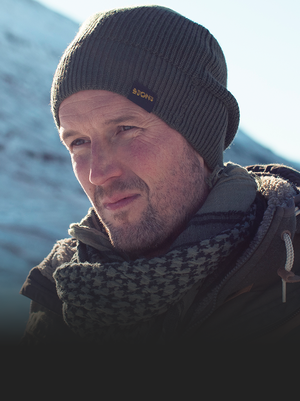
Fran O’Brien : A Rail Trip across Europe's Great Landscapes
Since the earliest days of homo sapiens, our brains have been wired to choose the path of least resistance. When our ancestors lived in the wild, it was necessary for survival to conserve energy. Though our surroundings have evolved dramatically since the age of hunter-gatherers, our instincts haven’t. This is why, unless we consciously push back, we often gravitate toward the simplest solutions.
After more than a decade in London, I realised I’d settled into a kind of professional safety net and that it was time to leave both city life and the corporate world behind. My passion for the advertising industry had waned, along with any appetite for navigating office politics or cultivating transactional relationships with those in positions of power simply to secure a promotion. It was also no longer a viable career knowing that many agencies were investing in AI platforms to automate tasks which would ultimately take over my role. I was on the verge of resigning when the company made the first move, announcing that 20 per cent of the workforce would be made redundant. In many ways, it was exactly what I needed. The redundancy package not only financed a career change but also afforded me the freedom to step outside my comfort zone and embark on a long-overdue adventure.
Train travel offered precisely that sense of possibility. It’s one of the most rewarding ways to uncover lesser-known places while crossing borders effortlessly and experiencing multiple cultures within a single journey. I spent three months travelling by train across Europe, driven by a simple objective: to find the best running trails along the way. Over that period, I covered more than 3,000 kilometres of railway line across eight countries.
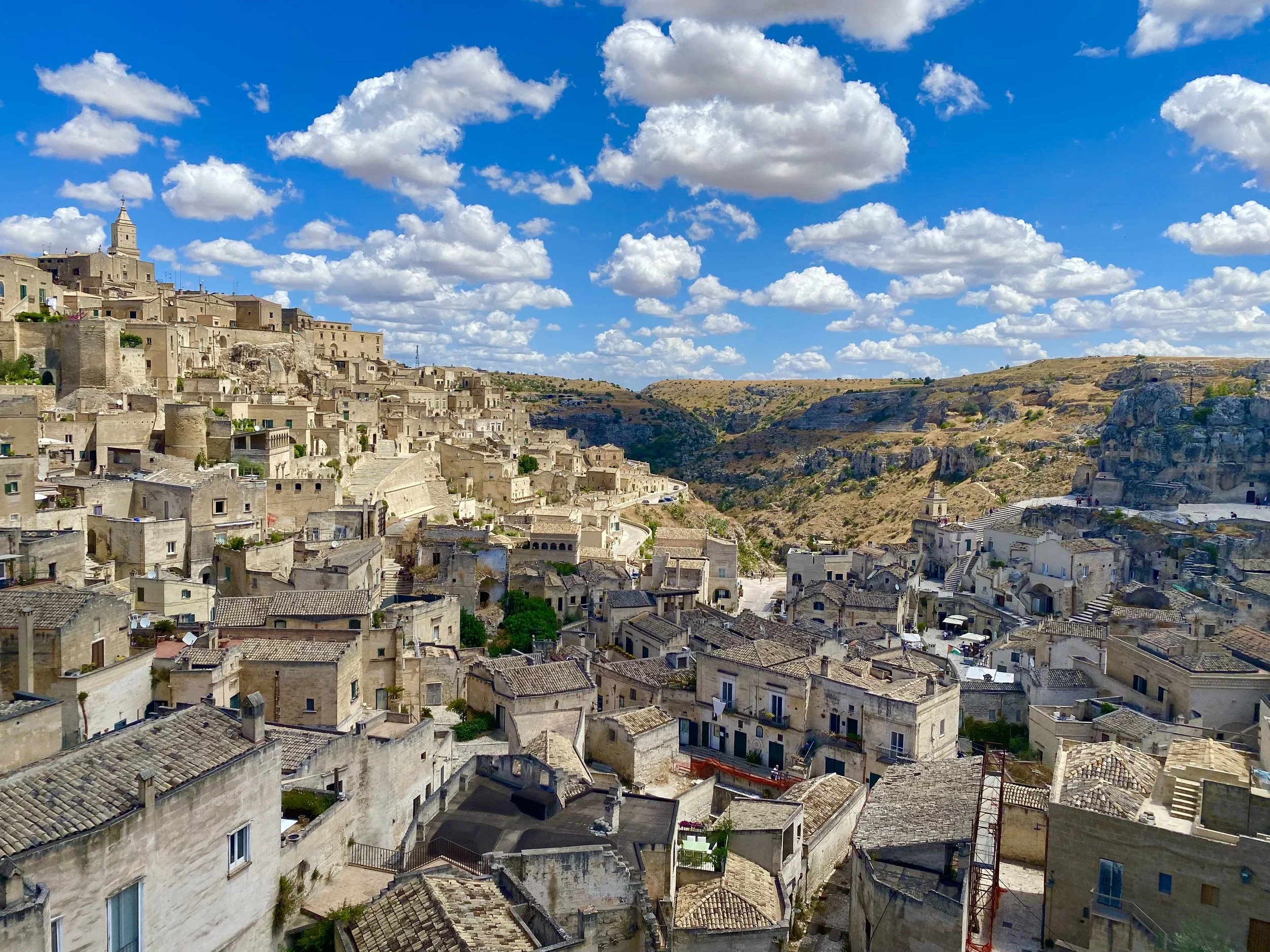
My train travels began in southern Italy, in Puglia and eventually carried me north to San Candido - a route made famous for transporting more than 70,000 children in the aftermath of the Second World War. These so-called “Happiness Trains” formed part of a programme designed to offer impoverished children from the south a chance at a better life by placing them with wealthier families in the north. As my own train crossed the country, the same economic divide was visible in the passing landscapes: the agricultural fields and sun-baked villages of the south gradually giving way to the industrialised, cosmopolitan cities of the north. For years, most tourists had gravitated towards northern Italy, including myself. Yet it was the rustic charm of the Mediterranean south, with its unhurried rhythms that won me over. Its extensive network, linking ancient towns with Baroque cities, allowed me to discover an entirely new side of the country.
“Blossoming valleys stretching for miles, and a dozen wild horses with golden manes grazing as if arranged for a postcard...”
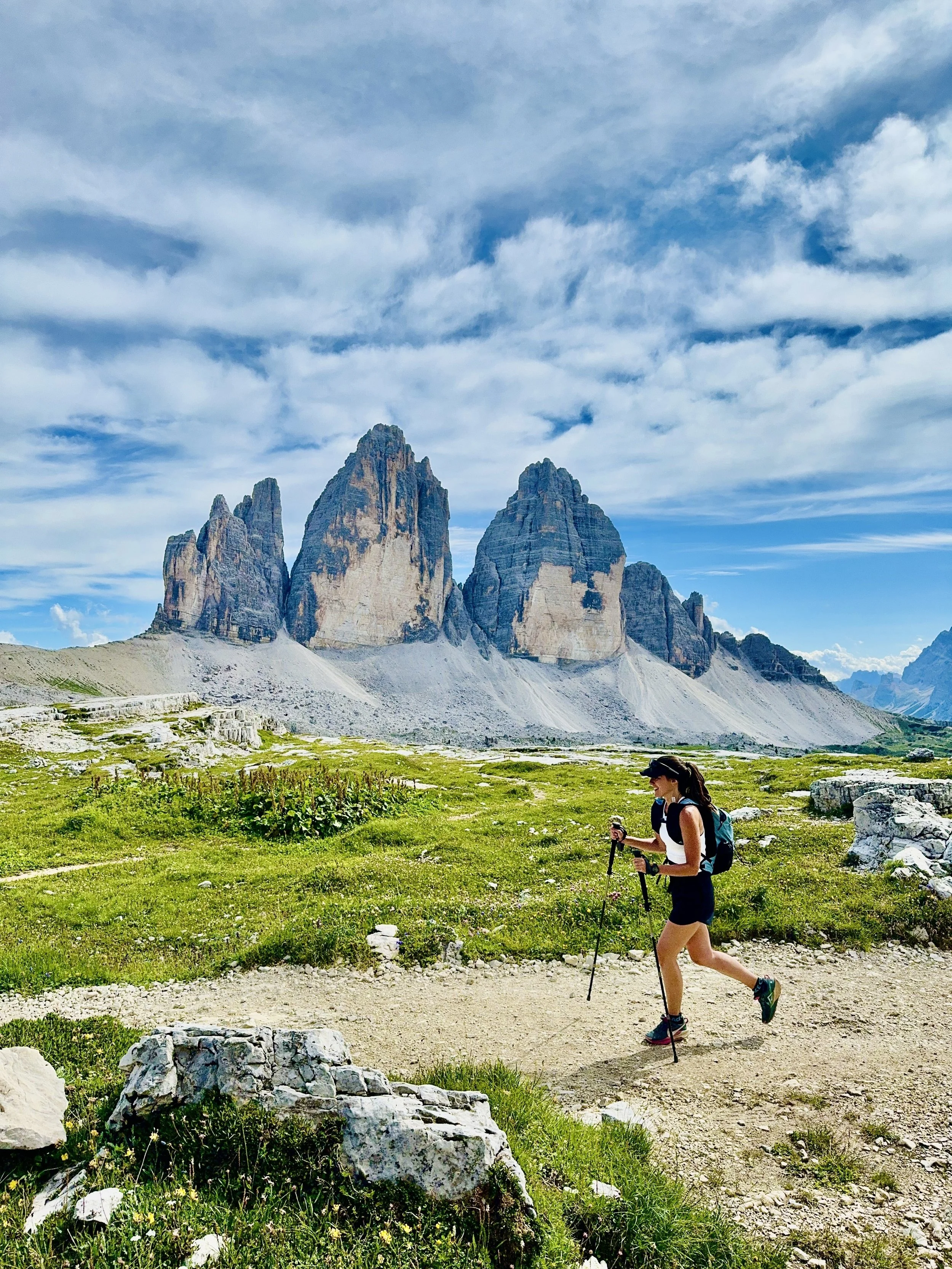
I was travelling the length of Italy, planning to finish in the mountains and spend four days running the trails of the Dolomites. After arriving earlier than planned, I suddenly had an afternoon to myself giving me time to explore. That morning on the train, I’d sat beside a Bolivian man whose English was limited. The moment he realised I could speak his native language; he lit up with excitement. In our lively conversation, he told me about Kronplatz, a panoramic lookout offering sweeping views of the Dolomites and the surrounding valleys. With hours to spare before meeting up with fellow runners, I decided to seek it out.
When the landscape emerged into sight, I couldn’t believe what I’d stumbled upon: a full 360-degree panorama of blossoming valleys stretching for miles, and a dozen wild horses with golden manes grazing as if arranged for a postcard. It hardly felt real. Jutting out from the mountainside was a sleek glass building housing a photography exhibition featuring mountain imagery and stories of perilous journeys undertaken by refugees and soldiers who had escaped over mountains during war. After wandering through, I settled at a café where a baguette and a glass of wine, cheaper than water, left me both culturally and physically nourished. It was an afternoon well spent and a place discovered entirely by accident and all thanks to a South American stranger on a train.
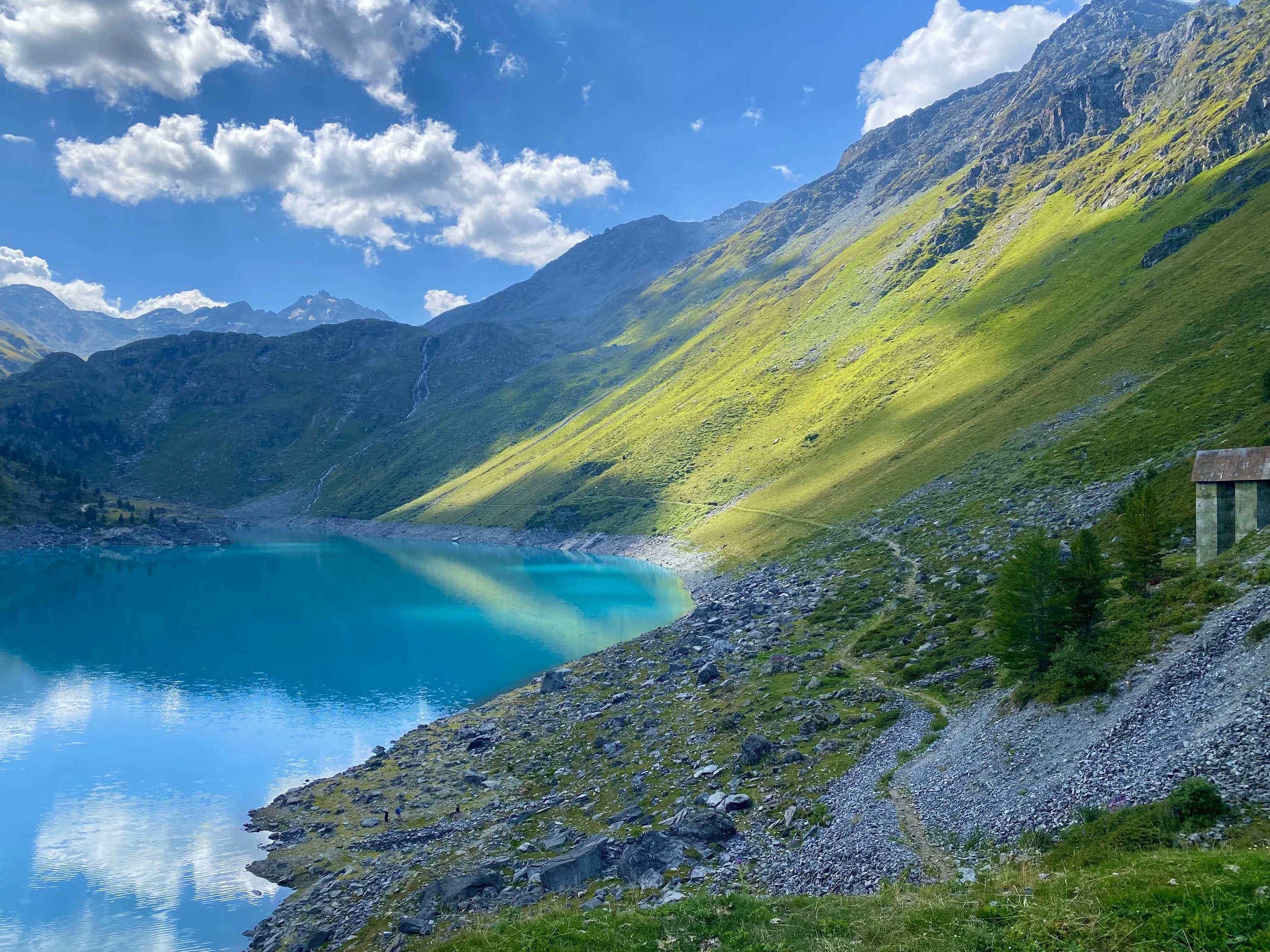
After a month spent weaving my way through olive groves and avenues of Italian cypress, the train rocked back down towards Milan before crossing into Switzerland. The landscape shifted dramatically: wide valleys unfurled on either side of the tracks, lined with lush, abundant vines and Alpine lakes. Beside me sat a man carrying an axe - something that would set me on edge back in the UK. Here, though, he looked more like a climber than a threat, and I soon lost myself in my book, glancing up every so often to soak in the views. During my time in Switzerland, the most memorable stretch was the journey from Sachseln to Interlaken, watching the carriage skim the edges of Lake Sarnen and the brilliant turquoise waters of Lake Brienz.
At the end of my travels across Switzerland, I took the train across the border to run in the French Alps for a few days followed by watching the elite trail runners cross the finish line at UTMB in Chamonix. The race was spectacular, but the journey itself was just as memorable. Nestled amid the breath-taking Alpine landscape, the iconic Mont Blanc Express is often cited as one of the world’s most scenic railways. It winds through deep gorges, skirts glaciers, and offers uninterrupted mountain views and was the idyllic close to my time in the Alps.
At the end of my three months of train travel came the ultimate journey: a five-day rail adventure through five countries. Long-distance train travel has always held a certain romance - sleeping in one country and waking in another. The journey began in the Netherlands and concluded in Montenegro, with the final stretch proving the most unforgettable. This 12-hour trip from Belgrade to Bar is considered one of the most scenic routes in Europe. Engineers had spent 20 years carving out 254 tunnels and 435 bridges through mountains to reach the Adriatic. As a result, the line weaves through valleys flanked by river gorges with the Dinaric Alps looming in the distance. The best part involved drifting in and out of sleep in the early hours of the morning as the train skimmed the edges of Lake Skadar, the largest lake in the Balkans. Watching the lake teaming with birdlife from the comforts of my bed as I overlooked the water’s edge was a particularly special moment.
The slowness of train travel had replenished my mind, allowing me to savour moments and observe the world around me. When you operate in default mode, you become blind to what’s happening around you so train travel reminded me to take in my surroundings. Most importantly the trip reminded me of the importance of resisting the easy path - not only in travel, but in all aspects of life.
Life is about experiences and encounters, lifting you out of your comfort zone. Functioning on autopilot breeds complacency and dulls our sense of purpose so it’s essential to keep reassessing your life to prevent the humdrum of daily routine from taking over. While the easy route may offer short-term comfort, it’s those moments of stepping into the unknown that yield the richest adventures and memories.